
Due to the flexibility and fashionable design of magnetic attraction lamps, magnetic track lighting has become a major product in modern homes and commercial Spaces. But many homeowners and designers still wonder: How do magnetic lamps work? Meanwhile, there are still many mysteries about the track lighting system that remain unsolved. In this guide, we will break down the science behind magnetic lamps and then delve into the most common problems with track lighting to keep your lighting system running smoothly. Whether you are considering installing low-voltage magnetic track lights or hoping to troubleshoot the existing LED magnetic track lights, this article can be of help to you.
Unlike traditional ceiling lamps that rely on screws or clips for installation and wiring, magnetic track lights are a clever combination of magnetic attraction and concealed conductive technology. The following is a step-by-step breakdown of their working principles:
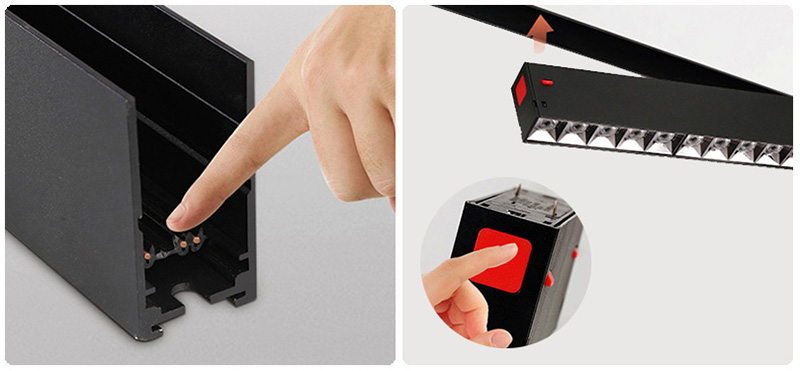
Magnetic track: Usually made of lightweight and durable aluminum, the track contains two key elements: magnetic strips built along its length and conductive copper strips hidden inside. Connect the track to the power supply of the corresponding voltage as required.
Magnetic lighting fixtures: spotlights, linear lights, RGB modules or downlights, etc. Each lamp base is equipped with a strong magnet and safety clips to ensure that the lamp is firmly attached to the track without the risk of falling. The metal contact pins of the lamp base can obtain power by contacting the conductive copper strips of the track.
Power supply: Convert your home's standard high-voltage AC power supply to a low-voltage DC power supply. This step is crucial for safety. Even when repositioned, low-voltage magnetic lamps pose the minimum risk of electric shock.

1.The magnetic rail has been installed and connected to the low-voltage power supply
2. When you place the magnetic attraction lamp on the track, the magnet on the lamp base adheres tightly to the track and can fix it in place even on horizontal or vertical surfaces.
3. When the fixture is attached, its metal contact needle comes into direct contact with the conductive copper strip in the track, completing the circuit.
4. The magnetic attraction lamp was lit up. To reposition or remove the lamp, simply loosen the snap and move the lamp to the designated position. No tools are needed to switch the position of the lamp.

Understanding the working principle of magnetic lamps can help you appreciate their simplicity and flexibility, while knowing the common problems of track lighting can enable you to solve them quickly. Whether you are upgrading your home lighting or designing a commercial space, magnetic track lighting can offer a perfect balance between form and function. With the above troubleshooting tips, you can keep your system running smoothly in the coming years.


